📖 9 min read
South Asia and the Middle East represent some of the fastest-growing markets for discount retail in the world. With a combined population exceeding 2.2 billion people and a rapidly expanding middle class that demands affordable everyday products, opening a discount store in these regions is not just viable — it is one of the smartest retail investments available today. Whether you are planning an INR 99 store in India, a NPR 99 store in Nepal, or a budget retail shop in Dubai, this guide covers everything you need to know about launching successfully across these diverse markets.
- South Asia and the Middle East offer massive, underpenetrated markets for discount retail — organized dollar-store-style chains are still rare in most countries.
- Price points must be localized: INR 49–199 for India, NPR 99–399 for Nepal, LKR 99–999 for Sri Lanka, AED 5–20 for the UAE.
- Yiwu, China remains the most cost-effective sourcing hub, with established shipping routes to every major port in the region.
- Cultural preferences vary significantly — religious items, kitchen essentials, and school supplies are universal winners, but packaging and color preferences differ by market.
- A well-planned first order of $3,000–$8,000 from Yiwu can fully stock a 300–600 sq ft discount store in any of these markets.
Market Overview: Why South Asia and the Middle East Are Primed for Discount Retail
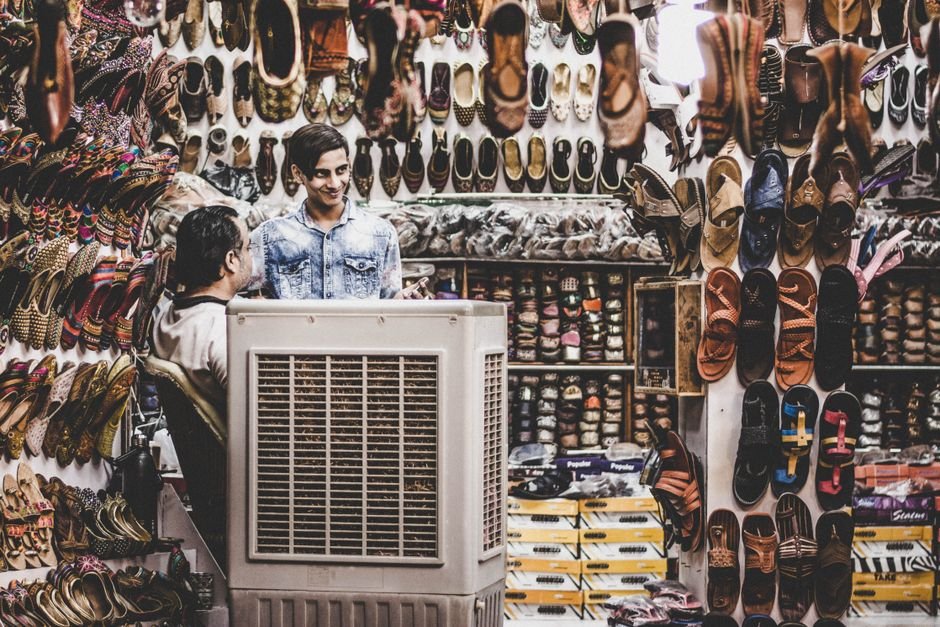
India alone has over 1.4 billion people, and the country’s organized retail sector still accounts for less than 12% of total retail sales. This means the vast majority of consumer spending happens in unorganized, fragmented local shops — creating an enormous opportunity for well-run discount stores that offer consistent pricing, product variety, and a clean shopping experience. The INR 99 store format has exploded in popularity across Indian cities, with stores in Tier 2 and Tier 3 cities often outperforming those in metros due to lower rent and less competition from e-commerce.
Nepal, Sri Lanka, and Bangladesh share similar dynamics: large populations with growing disposable income, limited organized retail infrastructure, and strong demand for affordable imported goods. The NPR 99 store model in Nepal and the LKR 99 store model in Sri Lanka have proven that the fixed-price discount concept translates powerfully across South Asian cultures.
The Middle East presents a different but equally compelling opportunity. Countries like the UAE and Saudi Arabia have large expatriate populations — workers from South Asia, Southeast Asia, and Africa — who actively seek affordable everyday products. The 1–10 dirham store format is already popular in neighborhoods with high migrant worker density, and the demand continues to grow as Gulf economies diversify beyond oil and expand their consumer sectors.
Market Comparison: Price Points, Regulations, and Opportunity by Country
| Country | Price Point Range | Startup Cost (USD) | Import Duty Range | Key Opportunity |
|---|---|---|---|---|
| India | INR 49–199 ($0.60–$2.40) | $5,000–$12,000 | 10–30% | Tier 2/3 cities, massive youth population |
| Nepal | NPR 99–399 ($0.75–$3.00) | $3,000–$7,000 | 5–25% | Limited organized retail, growing urban class |
| Sri Lanka | LKR 99–999 ($0.30–$3.00) | $4,000–$9,000 | 15–30% | Post-crisis demand for affordable goods |
| Bangladesh | BDT 50–200 ($0.45–$1.80) | $3,000–$6,000 | 10–25% | 160M+ population, fast-growing consumer market |
| Pakistan | PKR 100–500 ($0.35–$1.75) | $4,000–$8,000 | 10–35% | 230M+ population, value-driven consumers |
| UAE | AED 5–20 ($1.35–$5.45) | $8,000–$20,000 | 5% (flat) | High expat population, strong purchasing power |
| Saudi Arabia | SAR 5–20 ($1.33–$5.33) | $10,000–$25,000 | 5–15% | Vision 2030 retail expansion, young population |
Sourcing from Yiwu: The Engine Behind Profitable Discount Stores
Yiwu, China is the undisputed global capital of small commodity manufacturing. The Yiwu International Trade City houses over 75,000 suppliers across 5.5 million square meters of showroom space, offering everything from kitchen utensils and stationery to toys, cosmetics, and home decor — all at factory-direct prices. For discount store operators in South Asia and the Middle East, Yiwu sourcing is the foundation of profitability because it allows you to purchase products at $0.05–$0.50 per unit and sell them at 3x–8x markup in your local market.
Working with an experienced wholesale sourcing partner like AwwwStore eliminates the complexity of navigating Yiwu’s vast supplier network. A sourcing agent handles supplier vetting, price negotiation, quality inspection, consolidation, and export documentation — services that are especially critical for first-time importers who may not speak Mandarin or understand Chinese export regulations. The typical sourcing commission is 3–5% of order value, a cost that pays for itself many times over through better pricing and avoided quality issues.
Shipping routes from Yiwu to the region are well established and cost-effective. Sea freight to Mumbai (Nhava Sheva port) takes 14–18 days, to Colombo 12–16 days, to Karachi 15–20 days, and to Dubai (Jebel Ali port) just 10–14 days. For smaller initial orders under one cubic meter, consolidated LCL (Less than Container Load) shipping is available at $40–$80 per cubic meter, making it feasible to start with a modest test order before committing to full container loads.
Cultural Preferences and Product Mix by Region
Understanding cultural preferences is essential for curating a product mix that sells. In South Asian markets, kitchen and household items consistently rank as the top-selling category — stainless steel utensils, plastic storage containers, cleaning supplies, and cooking tools are everyday necessities that customers repurchase regularly. School and office supplies are the second strongest category, driven by large youth populations and the start of each academic year being a major sales event.
Religious and cultural items vary by market but are universally important. In India and Nepal, items for puja (prayer) — incense holders, small brass lamps, decorative flowers — sell year-round with spikes during Diwali, Dashain, and other festivals. In Pakistan, Bangladesh, and the Middle East, prayer beads (tasbih), attar (perfume oils), and Ramadan-related products see strong seasonal demand. Stocking culturally relevant items signals to customers that your store understands their needs, building loyalty beyond just price.
In the UAE and Saudi Arabia, the product mix shifts toward slightly higher-quality items. Expatriate workers seek affordable alternatives to expensive mall retail, but they still expect decent packaging and presentation. Gift items, personal care products, phone accessories, and small electronics perform exceptionally well. Packaging with Arabic text or bilingual English-Arabic labels significantly improves perceived value and is a service that most Yiwu manufacturers can accommodate for orders above minimum quantities.
Recommended First-Order Product Mix
Your first order sets the foundation for your store’s identity. Based on sales data from successful discount stores across the region, here is a recommended category breakdown for an initial order of $4,000–$6,000:
- Kitchen and household (30%): Plastic containers, cleaning brushes, sponges, hangers, trash bags, utensils, cutting boards
- Stationery and school supplies (20%): Notebooks, pens, pencil cases, rulers, erasers, glue sticks, markers
- Personal care and beauty (15%): Hair accessories, mirrors, nail tools, combs, small cosmetic organizers
- Toys and children’s items (10%): Small figurines, puzzles, coloring sets, building blocks, stickers
- Phone and electronics accessories (10%): Charging cables, phone cases, earbuds, screen protectors
- Seasonal and cultural (10%): Festival decorations, gift bags, candles, religious items relevant to your market
- Impulse and checkout items (5%): Candy, keychains, mini tools, novelty items placed near the register
This mix ensures you cover the broadest range of customer needs while concentrating investment in proven high-turnover categories. As you learn which products move fastest in your specific location, you can adjust subsequent orders accordingly. Contact AwwwStore’s sourcing team for a customized product list tailored to your target market and budget.
Navigating Regulatory Differences
Import regulations vary significantly across the region, and understanding them before you place your first order prevents costly delays. India requires an Import Export Code (IEC) for any commercial import, obtainable online from the Directorate General of Foreign Trade in 3–5 business days. Certain product categories — electronics, cosmetics, food items — require additional BIS (Bureau of Indian Standards) certification or FSSAI registration.
Nepal’s import process is relatively straightforward for most consumer goods, but all imports must clear through customs brokers registered with the Nepal Customs Department. Sri Lanka imposes a CESS (Special Commodity Levy) on certain imported consumer goods on top of standard customs duties, which can affect your landed cost calculations. In the Gulf states, the GCC Standardization Organization (GSO) sets product safety and labeling requirements that apply uniformly across the UAE, Saudi Arabia, and other GCC countries — products must carry Arabic labeling and meet GSO safety standards to clear customs.
A reliable sourcing partner familiar with these regulations can prepare the correct documentation, certificates of origin, and packing lists to ensure smooth customs clearance in your destination country. This is one of the most important reasons to work with an experienced export agent rather than attempting to source directly from Yiwu factories on your first order.
Planning to Open a Dollar Store?
Get our free $5,000 Starter Kit — the complete blueprint from Yiwu sourcing to opening day, with real cost breakdowns for your country.
Get Free Starter Kit →Frequently Asked Questions
What is the minimum order quantity when sourcing from Yiwu for a small discount store?
Most Yiwu suppliers have minimum order quantities (MOQs) of 100–500 units per product. However, when you work through a sourcing agent, they can consolidate orders across multiple suppliers and ship as a single LCL shipment. This means you can order as few as 2–3 cartons of each product and still get competitive pricing. A realistic first order for a small store is $3,000–$5,000, which typically fills 3–8 cubic meters and provides 1,500–3,000 SKUs of opening inventory.
How do I handle currency fluctuations when importing from China?
Most Yiwu export transactions are priced in USD, which provides some stability. To manage risk, consider placing orders when your local currency is relatively strong against the dollar, negotiate fixed pricing with your supplier for 60–90 days, and maintain a small dollar reserve to take advantage of favorable exchange rates. For larger orders, your bank may offer forward contracts that lock in exchange rates for future payments.
Which South Asian country is easiest to start a discount store in as a first-time entrepreneur?
India offers the most accessible entry point due to its established import infrastructure, large consumer market, widespread English-language business environment, and well-documented regulatory processes. Tier 2 cities like Jaipur, Lucknow, Indore, and Coimbatore offer the best combination of low rent, high demand, and limited organized retail competition. Nepal is also highly accessible for smaller-scale operations, with lower startup costs and simpler business registration processes.
Ready to Launch Your Discount Store?
AwwwStore specializes in sourcing and exporting dollar store products from Yiwu to South Asia and the Middle East. From product selection to customs-ready documentation, we handle every step of the supply chain so you can focus on building your business.
Get a Free Sourcing Quote📚 Recommended Reading

Neal is the founder of AwwwStore and a veteran of the Yiwu wholesale market with over 15 years of cross-border trade experience. He specializes in dollar store supply chain optimization and has helped launch 200+ stores across 30 countries.