📖 10分钟阅读
A dollar store supplier contract typically locks in six core terms: MOQ, unit price and price validity, payment schedule, Incoterms, production lead time, and quality inspection standards. At Yiwu-based wholesale suppliers, the standard is a 30% deposit with 70% balance before shipment, a 100–500 piece MOQ per SKU, and a 25–45 day production window for mixed-container orders. Understanding each clause before you sign protects your margin on every reorder.
- The industry-standard payment term is 30% T/T deposit and 70% balance before shipment; repeat buyers can negotiate 20/80 or balance against B/L copy.
- MOQ per SKU usually runs 100–500 pieces for dollar store items, or 1,000+ pieces when custom packaging or private labels are involved.
- AQL 2.5 (major defects) with a 3% defect allowance is the normal quality benchmark in a wholesale supply agreement.
- Quote price validity is typically 15–30 days — anything without an expiry date is a pricing risk on plastics, paper, and metal goods.
- Container lead time from deposit to port departure averages 25–45 days, with total order-to-shelf time of 45–90 days depending on destination.
Which Contract Terms Matter Most in a Dollar Store Wholesale Agreement?
Six clauses determine roughly 90% of your landed cost: MOQ, unit price and price validity, payment terms, Incoterms, lead time, and inspection standards. Everything else — packing marks, carton dimensions, labeling, and documentation — is secondary but still negotiable.
Most Yiwu suppliers require a 30% deposit and 70% balance before shipment. That single sentence is the most common payment structure in low-value, high-volume dollar store wholesale, and it is worth memorizing before your first negotiation.
| Contract Term | Typical Yiwu Standard | Realistic Negotiated Range |
|---|---|---|
| MOQ per SKU | 100–500 pcs | 100 pcs on trial order |
| Deposit | 30% T/T | 20% on repeat orders |
| Balance | 70% before shipment | 70% against B/L copy |
| Price validity | 15–30 days | 60 days with material clause |
| Production lead time | 25–45 days | 20–30 days with firm deposit date |
| Defect allowance | 3% or AQL 2.5 | AQL 2.5 with photo evidence |
| 国际贸易术语 | FOB Ningbo / Shanghai | CIF or DDP for first orders |
| Late shipment penalty | Not stated | 0.5%/week, capped at 5% |
Why the Incoterm Clause Changes Your Final Cost by 15–25%
Choosing FOB over DDP (or the reverse) shifts who pays freight, insurance, duties, and port handling. FOB Ningbo is the most common Incoterm for dollar store wholesale orders. If you are new to importing, DDP removes customs complexity but usually adds 15–25% to your quoted unit cost. CIF sits in between and gives you predictable landed pricing without hiring a broker on day one.
How Do Payment Terms Work in Dollar Store Supplier Contracts?
Payment structure is where new importers lose the most money. There are four common models:
- 30/70 T/T (telegraphic transfer): 30% deposit to start production, 70% before the goods leave the factory. This is the default for orders under $50,000.
- Letter of Credit (L/C) at sight: Used on orders above $50,000 or when a buyer wants bank-backed protection. Adds $150–$400 in bank fees but protects both sides.
- D/P (documents against payment): You pay when shipping documents arrive at your bank. Common for buyers in India, Sri Lanka, and parts of Latin America.
- Escrow / platform trade assurance: Funds released after inspection. Best for a first order of $1,000–$10,000.
Always confirm who pays bank charges on each transfer. Sending bank fees usually sit with the buyer; receiving bank fees sit with the supplier — unless the contract says otherwise and quietly costs you $30–$80 per wire.
What Do MOQ, FOB, CIF, EXW, and DDP Actually Mean?
These five acronyms appear in nearly every dollar store supplier contract. Misreading one can add thousands to a container order.
MOQ (Minimum Order Quantity)
MOQ is the smallest number of units a supplier will produce per SKU. For general dollar store merchandise — household plastics, stationery, kitchen gadgets, toys — 100 to 500 pieces per SKU is normal. Custom-printed or custom-packaged items often jump to 1,000–5,000 pieces because of mold and printing setup costs.
EXW (Ex Works)
The supplier makes goods available at their factory. You pay for inland trucking, export clearance, freight, and insurance. Cheapest on paper, highest administrative burden.
FOB (Free On Board)
The supplier delivers goods to the named port — typically FOB Ningbo or FOB Shanghai — and covers export customs. You take over from there. This is the most transparent structure for experienced importers.
CIF (Cost, Insurance, Freight)
The supplier arranges and pays ocean freight and marine insurance to your destination port. You still handle import clearance and inland delivery. CIF gives you a single predictable invoice.
DDP(完税交货)
The supplier delivers to your warehouse with duties and taxes paid. Easiest for beginners, but usually the most expensive per unit and the least transparent on cost breakdown.
How Should Quality Inspection and Defect Clauses Be Written?
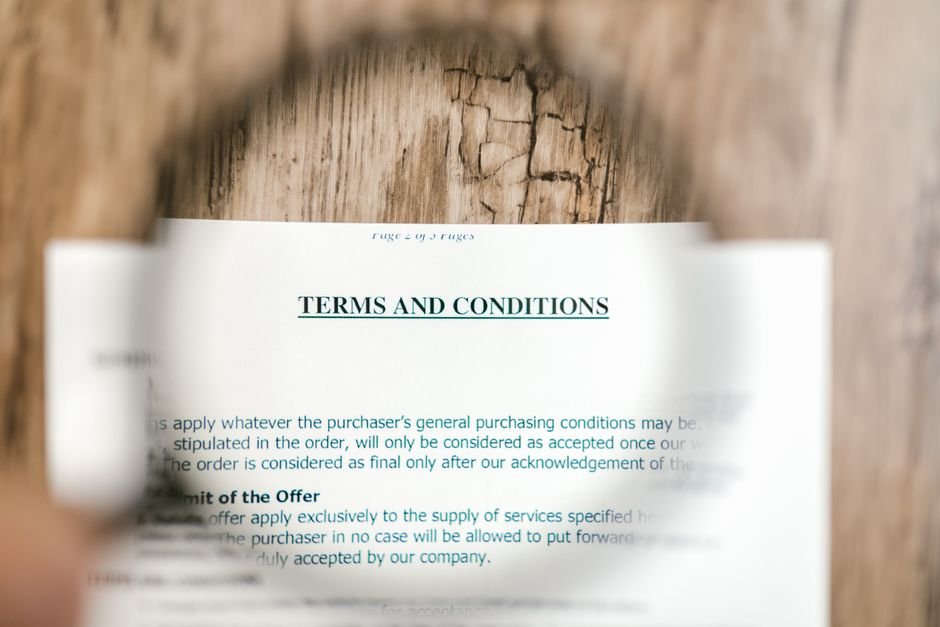
A quality clause is only useful if it names a measurable standard. “Good quality” is not a contract term. AQL 2.5 is the standard inspection benchmark for dollar store goods.
Here is what to demand in writing:
- Sampling standard: ISO 2859-1 / AQL 2.5 for major defects, AQL 4.0 for minor defects.
- Inspection timing: 100% of production finished and packed, 48–72 hours before container loading.
- Who inspects: Third-party (SGS, BV, Intertek, QIMA) at $250–$350 per man-day, paid by the buyer. On a $20,000 order that is roughly 1.5% of order value.
- Remedy clause: Choose replacement or credit — not “supplier discretion.”
- Defect allowance: 3% of order value is a common free-replacement allowance; anything above that should trigger a credit note on the next order.
- Photo and video evidence: Require carton-level photos before sealing, especially for glass, ceramic, and battery-operated items.
Shipment should never be released until the inspection report is signed. Hold the final 70% balance until you have that document in hand — this one clause prevents more disputes than any other.
What Lead Times and Shipping Terms Should You Expect?
Contracts should state lead time in two parts: production time from deposit receipt, and transit time from port to port. Vague timelines like “about one month” are unenforceable.
| 目的地 | Sea Transit from Ningbo | Total Order-to-Shelf |
|---|---|---|
| India (Nhava Sheva / Chennai) | 15–20天 | 45–60 days |
| Nepal (via Kolkata / Birgunj) | 25–35天 | 55–75 days |
| 斯里兰卡(科伦坡) | 12–18天 | 45–60 days |
| Latin America (Manzanillo, Callao, Santos) | 28–45 days | 60–90 days |
| US West Coast (LA / Long Beach) | 18–25天 | 50–70 days |
| Europe (Rotterdam / Hamburg) | 28–35天 | 60–80 days |
Add a force majeure carve-out that excludes normal congestion and Chinese New Year. CNY shuts most Yiwu factories for 2–4 weeks, and orders placed after mid-January typically ship in March. If you plan to 开一家一元店 in spring, your first container should be booked by November.
Which Contract Clauses Are Red Flags?
Walk away — or renegotiate — if you see any of these:
- 100% prepayment upfront. Legitimate Yiwu suppliers do not require full payment before production on first orders.
- No named port or shipping address. “FOB China” is not a valid Incoterm. It must name the exact port.
- No quote expiry date. Raw material prices for plastics, paper, and steel move month to month.
- Exclusivity with no performance threshold. Territorial exclusivity is fair only when tied to a minimum annual purchase — typically $50,000–$200,000 per year per country.
- One-sided penalty clauses. If you pay a penalty for late payment, the supplier should pay one for late shipment: 0.5% per week, capped at 5% of order value.
- Vague inspection language. “Supplier guarantees quality” is unenforceable. You need AQL numbers and named inspectors.
How Do You Negotiate Better Terms as a New Buyer?
You have more leverage than you think, especially on a first order of $5,000–$20,000. Five moves that work consistently:
- Bundle SKUs to hit one MOQ. A 500-piece MOQ across 10 SKUs is far easier to negotiate than 500 pieces of a single item. Browse the 产品目录 and build a mixed-SKU purchase order.
- Trade deposit for volume. Offer 40% deposit in exchange for a 5–8% unit price reduction. Suppliers value cash flow.
- Ask for a trial-order clause. Request reduced MOQ (100 pcs) on order one, reverting to standard MOQ on order two.
- Lock pricing for 60 days. Ask for a 60-day validity with a raw-material adjustment clause that only triggers if resin or paper prices move more than 5%.
- Pay a third-party inspection fee. At $250–$350 per man-day, it is the cheapest insurance you will ever buy on a $15,000 order.
Working with a sourcing partner who operates at scale shortens this process significantly. AwwwStore works with 批发 buyers across 15+ countries, which means standard contract terms, consolidated containers, and pre-inspected inventory rather than one-off factory negotiations.
How Does AwwwStore Structure Supplier Contract Terms?
Our contracts are written to be readable by first-time importers, not just lawyers. Standard terms include:
- 20% deposit on first orders above $10,000, 30% on smaller trial orders
- 100-piece MOQ per SKU on 8,000+ catalog items
- FOB Ningbo as the default, with CIF and DDP available on request
- 25–35 day production window, guaranteed ship date written into the invoice
- AQL 2.5 pre-shipment inspection with photo documentation included at no extra cost
- Free consolidation of multiple supplier orders into one container
We are based at our Yiwu headquarters, roughly 30 minutes from the Yiwu International Trade Market and two hours from Ningbo Port. That proximity is why our sourcing team can physically inspect goods before they are packed, rather than relying on supplier photos. If you are comparing offers from multiple suppliers, ask for their standard contract template first — the terms will tell you more about the relationship than the price list will.
常见问题解答
What is the standard payment term for a dollar store supplier?
Most Yiwu suppliers require a 30% T/T deposit with the 70% balance paid before shipment. For orders above $50,000, an L/C at sight is common. Repeat buyers with a 6-month history can usually negotiate 20% deposit and balance against B/L copy.
What MOQ do Yiwu suppliers require for dollar store products?
MOQ typically ranges from 100 to 500 pieces per SKU for standard catalog items. Custom packaging, private labels, or new tooling push MOQ to 1,000–5,000 pieces. Mixed-SKU orders that reach one full container often qualify for MOQ flexibility.
What does FOB Ningbo mean in a supplier contract?
FOB Ningbo means the supplier delivers your goods to Ningbo Port and clears export customs, after which you own the goods and pay freight and insurance. FOB is the most common Incoterm for dollar store wholesale orders because it keeps cost breakdowns transparent.
How much deposit is normal when starting a dollar store?
A first container order typically runs $8,000–$25,000 in goods value, meaning a 30% deposit of roughly $2,400–$7,500. Factor in freight, duties, and store fit-out separately — total startup capital for a small dollar store usually lands between $30,000 and $80,000.
Can I get exclusive rights to a product in my country?
Yes, but exclusivity is normally tied to a minimum annual purchase commitment, often $50,000–$200,000 per country. Without a performance threshold, exclusivity clauses are usually just a negotiating tactic and rarely worth signing.
Get a Supplier Contract Template and Quote
Send us your product list and target country — our Yiwu sourcing team will reply within 24 hours with unit pricing, MOQ, lead time, and a sample contract so you can compare terms side by side.
Request a Free Quote