📖 10分钟阅读
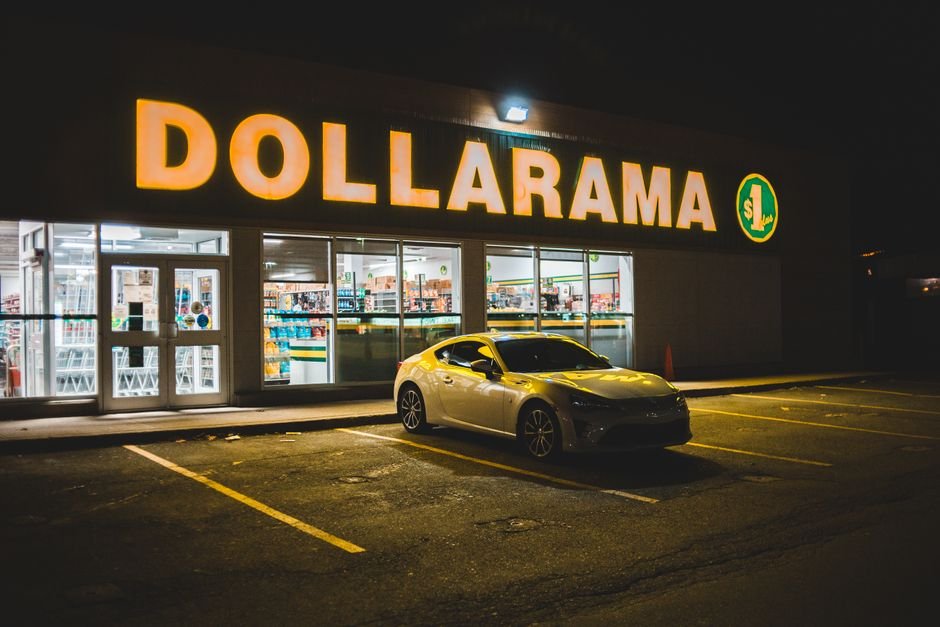
A Dollarama vendor is a manufacturer, exporter, or trading company that supplies Dollarama Inc. directly through its overseas buying offices in Asia or its distribution centres in Canada. Dollarama does not publish an open online vendor application portal — suppliers are onboarded through category buyers and sourcing offices after factory audits, lab testing, and container-level volume commitments.
- Dollarama runs roughly 1,600 stores in Canada and imports the majority of its general merchandise directly from Asia — its vendor bar is set at factory level, not store level.
- Becoming a Dollarama vendor typically takes 3–12 months and requires third-party lab reports, GS1 barcodes, product liability insurance, and pre-shipment inspections.
- Vendor programs are usually container-scale: 10,000–30,000 units per SKU is common, which is 20–50x more than a single-store owner needs.
- Retailers who source Dollarama-style goods through AwwwStore’s Yiwu network buy mixed cartons and hit 45–70% gross margins at $1.25–$3.00 price points.
- AwwwStore supplies 3,000+ stores across 15+ countries with low-MOQ mixed orders and DDP shipping — a faster path to Dollarama-style margins than a vendor contract.
What Is a Dollarama Vendor, Exactly?
A Dollarama vendor is an upstream supplier — factory, exporter, or consolidated trading company — that sells product into Dollarama’s direct-import pipeline. The relationship is business-to-business at scale: the vendor manufactures or sources goods, holds inventory or production capacity, and ships FOB to Dollarama’s logistics partners or CIF to Canadian ports.
Dollarama does not accept open vendor applications online; suppliers are onboarded through category buyers and overseas sourcing offices. That single fact explains why so many store owners searching for “Dollarama vendor” end up frustrated — they are looking for a retail supply relationship that doesn’t exist at that level.
The three types of Dollarama vendors
- Direct factory vendors. Manufacturers in China, Vietnam, India, Bangladesh, Cambodia, and Pakistan that produce private-label or Dollarama-branded goods. Usually the largest volume tier.
- Export trading companies. Consolidators that manage 50–500 SKUs across multiple factories and handle documentation, QC, and container loading.
- Domestic Canadian suppliers. Branded consumer-goods companies and distributors selling into Dollarama’s domestic program, often with existing retail placement elsewhere.
Why the term is widely misunderstood
Most people searching “dollarama vendor” are independent dollar store owners who want two things: Dollarama-quality products at Dollarama-level costs, and a shortcut into the supply chain that stocks those shelves. The first goal is completely achievable. The second is not, for a store doing under $50,000 a month. The realistic path is to buy the same categories from the same manufacturing region — Yiwu, Guangdong, Zhejiang, Fujian — through a wholesale partner that already consolidates there. That’s exactly the model AwwwStore runs, and you can browse the category range on our 产品目录.
How Does Dollarama’s Vendor and Sourcing Model Actually Work?
Dollarama is a direct-import retailer. Rather than buying through North American distributors at wholesale-plus-markup, it buys from Asian factories through its own buying infrastructure, lands goods in Canada, and prices everything at fixed points up to $5. That direct-import structure is the engine behind its low shelf prices — and the reason its vendor requirements are so demanding.
Because the company buys in container quantities across 1,600+ stores, a single purchase order can represent six figures of product. Vendors are selected on landed cost, production capacity, compliance documentation, and reliability — in roughly that order.
| Vendor Requirement | Typical Dollarama Standard | What It Means for You |
|---|---|---|
| Minimum order quantity | 10,000–30,000 units per SKU | Usually one 20ft or 40ft container per program |
| Supplier audit | Factory social + quality audit | Pass/fail; remediation can add 60–120 days |
| Product testing | Third-party lab reports (ISO 17025 labs) | $300–$1,500 per SKU depending on category |
| Barcoding | GS1-registered UPC/EAN | Vendor-owned GS1 prefix required |
| 保险 | Product liability coverage | $2M–$5M limits are standard for retail supply |
| Lead time | 60–90 days production + 25–35 days ocean | Working capital tied up for a full quarter |
| Approval timeline | 3–12 months from first contact | Most applicants never progress past sampling |
Figures above reflect typical North American direct-import retail vendor programs and are indicative ranges, not published Dollarama terms.
What Are the Real Requirements to Become a Dollarama Vendor?
If you genuinely want to pursue a vendor relationship, treat it like a 12-month project. Here is the practical checklist that separates serious applicants from everyone else:
- A registered business entity with a tax ID in your jurisdiction and at least two years of trading history.
- Factory-direct capability or a verifiable supply chain. Trading companies must prove they control their factories — not just broker them.
- Compliance documentation covering CPSIA, ASTM F963 (toys), FDA food-contact rules, Prop 65, and Canadian consumer product safety requirements where applicable.
- Capacity proof. Production schedules, machine lists, staffing numbers, and past container volumes.
- Logistics fluency. FOB/CIF/DDP experience, pallet configuration, and the ability to hit delivery windows without excuses.
- English-language communication with a single accountable account manager.
- Financial stability. Retail buyers assess whether you can absorb a rework order without going under.
Why Most Dollar Store Owners Will Never Become Dollarama Vendors
A single-store owner needs about $8,000–$15,000 of inventory to fill a 1,000 sq ft store, not a 40-foot container of one SKU. That mismatch is the whole story. Vendor programs are built around the economics of 1,600 stores; your store is built around the economics of one.
There is also a margin trap. A vendor earns 15–25% gross on high volume. A retailer buying smartly and selling at $1.25–$3.00 earns 45–70% gross on lower volume. For anyone operating stores rather than factories, the retail side is the better business. Most dollar store owners earn more per dollar invested by buying mixed cartons than by chasing a single-supplier vendor contract.
If a full vendor program isn’t realistic, the next-best move is to buy exactly like a vendor does — direct from the source region, in the same categories, with tested suppliers — but at a volume you can actually sell through. That’s the core of our wholesale program.
The Success Story: Dollarama-Style Margins Without a Vendor Contract
Here is a representative case from our Latin America buyer network that shows how the numbers actually work. A first-time store owner in Central America opened a 1,200 sq ft dollar-format store in 2023 after losing six months trying to reach retail category buyers.
Starting position
- Budget for opening inventory: $7,500
- Retail format: everything at $1.25, $1.99, or $2.99
- Target SKU count: 400
- Biggest fear: dead stock from a single oversized SKU buy
What they did instead of chasing a vendor deal
- Built a 400-SKU opening order across 18 categories in mixed cartons through AwwwStore’s Yiwu warehouse — average landed unit cost $0.42.
- Priced at $1.25 to $2.99, producing a blended gross margin of 58%.
- Restocked 60 fast-moving SKUs every six weeks rather than reordering everything twice a year.
- Reinvested the first quarter’s profit — about $9,400 — into a second order three times larger.
The result after 18 months
- Monthly cost of goods: from $1,900 to $18,000
- Inventory turns: 6.4x per year, versus a 2–3x industry norm for independent dollar stores
- Break-even on the initial investment: 4.5 months
- Zero dead-stock write-offs in the first year thanks to mixed-carton buying
The same playbook is running in different formats: 拉丁美洲 dollar-format stores, India INR 99 stores, and NPR/LKR fixed-price models across South Asia. The common thread is buying at source-region cost without container-scale exposure.
What Does It Actually Cost? Vendor Path vs. Wholesale Path
| 因素 | Selling to Dollarama as a Vendor | Buying from AwwwStore as a Retailer |
|---|---|---|
| Minimum commitment | 10,000+ units per SKU | Mixed cartons; low MOQ per SKU |
| Time to first shipment | 3–12 months | 3–10 days for quote, 15–30 days to ship |
| Compliance burden | Fully on the vendor | Supplier test reports provided; export docs handled |
| Gross margin | 15–25% on large volume | 45–70% at retail price points |
| Shipping terms | FOB Asia, buyer arranges ocean freight | DDP door delivery to 15+ countries |
| Working capital risk | High — one PO can exceed $80,000 | Low — test with $2,000–$10,000 orders |
| Who it suits | Manufacturers and export consolidators | Store owners, importers, and new chains |
How Do You Source Dollarama-Style Products at Wholesale? 5 Steps
1. Map the categories, not the products
Dollar-format retail wins on breadth: housewares, storage, party supplies, stationery, cleaning, kitchen gadgets, seasonal, toys, and personal care. Aim for 350–500 SKUs across 15–20 categories before you chase depth in any one of them.
2. Buy mixed cartons to protect cash flow
Ordering 24–48 units per SKU lets you test demand without dead stock. Our Yiwu catalogue is structured exactly for this — thousands of SKUs available in mixed master cartons.
3. Verify compliance before you commit
Ask for test reports on any product touching children, food, or skin. A supplier who cannot produce a lab report in 48 hours is a supplier who will cost you money later.
4. Control landed cost, not just FOB price
A $0.30 unit with $0.18 of freight and duty is more expensive than a $0.38 unit shipped DDP. Always compare landed cost per sellable unit against your target retail price, then check the margin holds at 50% or better.
5. Set a 6-week reorder rhythm
Fixed-price stores live and die on availability. Reordering your top 15% of SKUs every six weeks keeps shelf density high and turns inventory faster than quarterly bulk buys. If you’re still planning your store, our guide on 如何开设一元店 covers whole-store setup from fixture layout to opening inventory.
What Mistakes Should You Avoid When Chasing a Dollarama Vendor Deal?
- Paying for “Dollarama vendor lists.” No paid directory grants you a buying relationship. Legitimate access comes through category buyers, not PDFs sold for $49.
- Assuming a trading company equals a factory. Buyers verify production capacity; brokers get filtered out fast.
- Overcommitting on one SKU. A container of a single item is a bet, not a strategy — and dollar-format retail is won on assortment.
- Ignoring certification costs. Testing and compliance can add $5,000–$15,000 before your first shipment leaves the factory.
- Confusing supplier quality with retail performance. Great sourcing means nothing if the price point doesn’t sell in your market.
Your fastest route to a Dollarama-style shelf isn’t a vendor contract — it’s sourcing from the same manufacturing base with a partner who already ships there. Learn more about AwwwStore and our Yiwu headquarters.
常见问题解答
Can anyone apply to become a Dollarama vendor?
Dollarama does not operate a public vendor application portal. Supplier relationships are developed through its category buyers and overseas sourcing offices, typically with manufacturers or exporters that can meet container-level volumes and full compliance documentation.
How long does it take to become a Dollarama vendor?
Most direct-import retail vendor onboarding processes take 3–12 months from first contact to a first purchase order. Factory audits, third-party lab testing, and sample approvals are usually the slowest stages.
What is the minimum order to buy Dollarama-style products wholesale?
Through AwwwStore, buyers can start with mixed-carton orders rather than full containers. Most new stores begin with $2,000–$10,000 in opening inventory spread across 15–20 categories and 300–500 SKUs.
Can I sell Dollarama products in my own store?
You cannot resell Dollarama-branded merchandise without a supply agreement. You can, however, source the same product categories from the same manufacturing regions — Yiwu, Guangdong, Zhejiang — at comparable or lower landed costs.
Does AwwwStore help with whole-store setup?
Yes. AwwwStore supports full store setup including category planning, fixture sourcing, opening inventory, and restock scheduling for dollar-format stores, INR 99 stores, and NPR/LKR fixed-price formats across 15+ countries.
Skip the Vendor Waitlist — Source From Yiwu Directly
Get a free category plan and landed-cost quote for your store. AwwwStore supplies 3,000+ stores in 15+ countries with low-MOQ mixed cartons, tested products, and DDP delivery.
Get Your Free Wholesale Quote