📖 7 min read
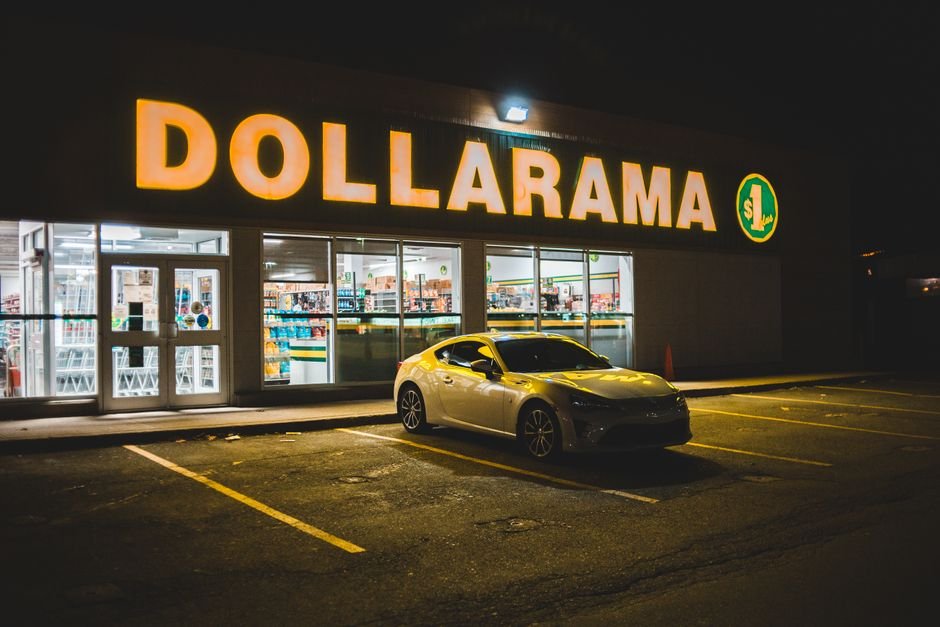
Dollarama stores are not franchised. Dollarama Inc. operates every one of its 1,600+ locations as a corporate-owned chain, which means there are no franchise fees, no franchisees, and no franchise opportunities available. The company grows through new store openings funded by corporate capital, not through independent operators buying territory rights. For entrepreneurs who want the dollar-store model without corporate ownership, independent store ownership or wholesale sourcing is the realistic path.
- Dollarama runs 1,600+ stores across Canada as a fully corporate-owned chain — zero franchised locations.
- Dollarama Inc. is publicly traded on the TSX (ticker: DOL) and reports corporate store counts in every quarterly filing.
- The company’s average store generates roughly CAD $3 million in annual sales, with corporate control over pricing, assortment, and operations.
- There is no Dollarama franchise fee, franchise disclosure document (FDD), or franchise application process — because no franchise program exists.
- Independent dollar stores can launch for a fraction of a corporate store build-out using wholesale suppliers like AwwwStore, which serves 3,000+ stores in 15+ countries.
What Is Dollarama’s Business Model — and Why No Franchising?
Dollarama is a Canadian discount retailer headquartered in Montreal, Quebec. The company buys in enormous volumes directly from manufacturers, imports heavily from low-cost production hubs, and sells a tightly curated assortment at fixed price points (currently up to CAD $5). That model depends on centralized control: one buying team, one pricing strategy, one distribution network.
Dollarama operates a fully corporate-owned store network of more than 1,600 locations. Franchising would dilute the centralized purchasing and pricing control that makes its low-price model work.
That’s the core reason franchising doesn’t fit. A franchisee needs margin to cover royalties, advertising funds, and their own profit. Dollarama’s prices are already compressed to the floor. Handing a store to an independent operator would either raise prices (breaking the value promise) or squeeze the franchisee to unworkable margins.
How Dollarama Actually Grows
Dollarama’s expansion comes from three levers:
- New corporate store openings — the company has historically opened 60–70 net new stores per year in Canada.
- Same-store sales growth — increasing basket size and traffic at existing locations.
- International expansion — a stake in Dollarcity extends the model into Latin America (Colombia, Peru, El Salvador, Guatemala).
Every one of those levers is corporate-funded. None requires a franchisee.
Dollarama vs. Franchised Dollar Store Chains: Side-by-Side Comparison
If you’re researching dollar store ownership, it helps to see exactly how a corporate chain compares to a franchise system and to independent ownership.
| Factor | Dollarama (Corporate) | Franchised Dollar Chains | Independent Store (AwwwStore Supply) |
|---|---|---|---|
| Ownership | Dollarama Inc. owns 100% of stores | Franchisee owns store, pays royalties | You own 100% |
| Franchise Fee | None (not available) | Typically $20,000–$50,000+ | $0 |
| Royalty | N/A | 4–8% of gross sales | 0% |
| Product Sourcing | Corporate buying team | Approved supplier list | Open — source from any wholesaler |
| Pricing Control | Corporate-set | Largely corporate-set | 100% yours |
| Typical Startup Cost | N/A | $150,000–$400,000+ | $10,000–$50,000 (inventory-led) |
Independent dollar store ownership typically requires $10,000–$50,000 in starting capital, compared with $150,000+ for most franchise build-outs. That gap is why independent ownership dominates among first-time operators.
Can You Open a Dollarama Franchise Anyway?
No. There is no application form, no waiting list, and no regional development program. Dollarama has never publicly offered franchise rights, and its investor disclosures describe a corporate store network only.
Be cautious of any website, social post, or “consultant” claiming to sell Dollarama franchise opportunities. These are not legitimate. Dollarama does not license its name, trademarks, or store format to third parties.
What About Buying an Existing Dollarama Store?
Corporate-owned stores aren’t sold to individuals either. Dollarama may close underperforming locations, but those closures are real-estate decisions, not franchise resales. There is no secondary market for “buying a Dollarama.”
Why Entrepreneurs Still Ask About Dollarama Franchising
The question comes up constantly because Dollarama is the most visible dollar-store success story in North America. Founders see strong foot traffic, clean stores, and consistent pricing, and they want in.
Dollarama’s model works because of scale: bulk purchasing power, private-label development, and a distribution network built over 30+ years. A single independent store can’t replicate that scale — but it can replicate the format: tight assortment, fixed price points, high turnover, and disciplined sourcing.
That’s where wholesale sourcing becomes the practical alternative. Instead of paying for a brand, you build your own. AwwwStore, based in Yiwu, China — the world’s largest small-commodity wholesale market — supplies independent dollar stores, 99-cent stores, and discount retailers across 15+ countries. You can browse the dollar store product catalog to see typical opening assortments, or review the whole store setup guide for a step-by-step launch plan.
How to Launch an Independent Dollar Store Instead
If your real goal is dollar-store ownership rather than a specific brand, here’s a practical sequence used by thousands of independent operators.
Step 1: Define Your Price Architecture
Pick a single price point or a small ladder (e.g., $1 / $2 / $3, or INR 99 / NPR 99 / LKR 99 depending on your market). Fixed price points simplify staffing, signage, and inventory decisions. Regional variants matter: see the India INR 99 store model, the Nepal NPR 99 store model, and the Sri Lanka LKR 99 store model for market-specific economics.
Step 2: Size Your Opening Inventory
A typical 500–1,000 sq ft independent dollar store opens with 800–1,500 SKUs. Budget 60–70% of startup capital for inventory. High-turn categories — housewares, party supplies, stationery, cleaning products, kitchen gadgets — should dominate the first order.
Step 3: Choose a Wholesale Supplier With Real Volume
Supplier reliability matters more than per-unit price. Look for a wholesaler that ships mixed cases, offers low minimum order quantities, and can consolidate multiple categories into one shipment. AwwwStore’s wholesale program is built around mixed-carton ordering for exactly this reason.
Step 4: Control Landed Cost
Your margin lives in landed cost: product price + freight + duties + local delivery. Importing directly from Yiwu typically cuts per-unit cost 30–50% versus domestic distributors, but only if you consolidate shipments and plan 4–8 weeks ahead.
Step 5: Open Lean, Then Expand
Most successful independent operators open one store, stabilize cash flow for 6–12 months, then add a second location. Franchising forces rapid multi-unit commitments; independent ownership lets you scale at your own pace.
Franchise vs. Independent: Which Path Fits You?
Choose a franchise if you want a proven brand, structured training, and are comfortable with $150,000+ in startup capital plus ongoing royalties. Choose independent ownership if you want full control over assortment and pricing, lower startup costs, and are willing to build your own supplier relationships.
Independent dollar stores offer the fastest path to ownership for most entrepreneurs. A franchise requires $150,000+ and 5–8% royalties; an independent store can launch for under $50,000 with zero royalties.
For cross-border operators, regional guides help: the Latin America market guide covers currency, import rules, and category demand for stores in that region. To understand AwwwStore’s Yiwu sourcing base and fulfillment capabilities, see the about AwwwStore page.
Frequently Asked Questions
Are Dollarama stores franchised?
No. Dollarama operates 1,600+ corporate-owned stores and has never offered franchise opportunities. There are no franchise fees, no franchisees, and no application process.
Does Dollarama offer any franchise opportunities in Canada or internationally?
No. Dollarama’s investor disclosures describe a corporate store network only. Its international exposure comes through a minority stake in Dollarcity, not through franchising.
How much does it cost to open a Dollarama store?
You cannot open a Dollarama store as an individual — the chain is 100% corporate-owned. Independent dollar stores, by comparison, typically launch with $10,000–$50,000 in starting capital, mostly inventory.
What is the cheapest way to start a dollar store?
Source inventory directly from a Yiwu-based wholesaler, open a smaller footprint (500–1,000 sq ft), and start with 800–1,500 high-turn SKUs. This keeps startup costs under $50,000 in most markets.
Can I use the Dollarama name for my own store?
No. Dollarama’s trademarks are protected, and using the name or logo would constitute trademark infringement. Independent stores should build their own brand identity.
Ready to Open Your Own Dollar Store?
AwwwStore supplies 3,000+ independent dollar stores across 15+ countries from our Yiwu headquarters. Get a free product list, mixed-carton wholesale pricing, and a whole-store setup plan tailored to your market.
Ready to Source Products for Your Dollar Store?
Get a free consultation and custom product plan tailored to your market.
Get Free Quote