📖 8 min de lectura
Starting a wholesale business in India today means tapping into an $883 billion retail market served by over 12 million kirana stores. The most practical entry route for international entrepreneurs is importing dollar-store goods from Yiwu, China, where landed costs run 30-50% lower than local Indian manufacturing for most everyday products.
- India’s retail market is projected to reach $1.4 trillion by 2027, creating massive wholesale demand across 12+ million kirana stores.
- Dollar-store format retailing (INR 99 Store) can deliver 35-45% gross margins for importers sourcing directly from Yiwu.
- Import duties on most non-essential consumer goods range from 10-20%; many household essentials qualify for reduced rates.
- B2B wholesale demand in India is growing at 8-10% annually — nearly double the global average.
- AwwwStore’s India INR 99 Store package covers 600+ SKUs with a complete setup that costs roughly 40% less than equivalent local sourcing.
Why Is India a Massive Opportunity for Wholesale Business in 2025?
India is not just another emerging market — it is the world’s most populous nation with a rapidly expanding middle class. Retail sales in India hit approximately $883 billion in 2024, and the country is on track to become the world’s third-largest economy by 2027. For importers and wholesale suppliers, this translates into one of the largest and fastest-growing consumer bases anywhere on the planet.
India’s retail market is projected to reach $1.4 trillion by 2027, making it the world’s fastest-growing consumer market. That growth is powered by over 100 million households with rising disposable income, accelerating urbanization, and an explosion in digital payments. The wholesale channels that serve these consumers — distributors, semi-wholesalers, and general trade retailers — are expanding just as quickly.
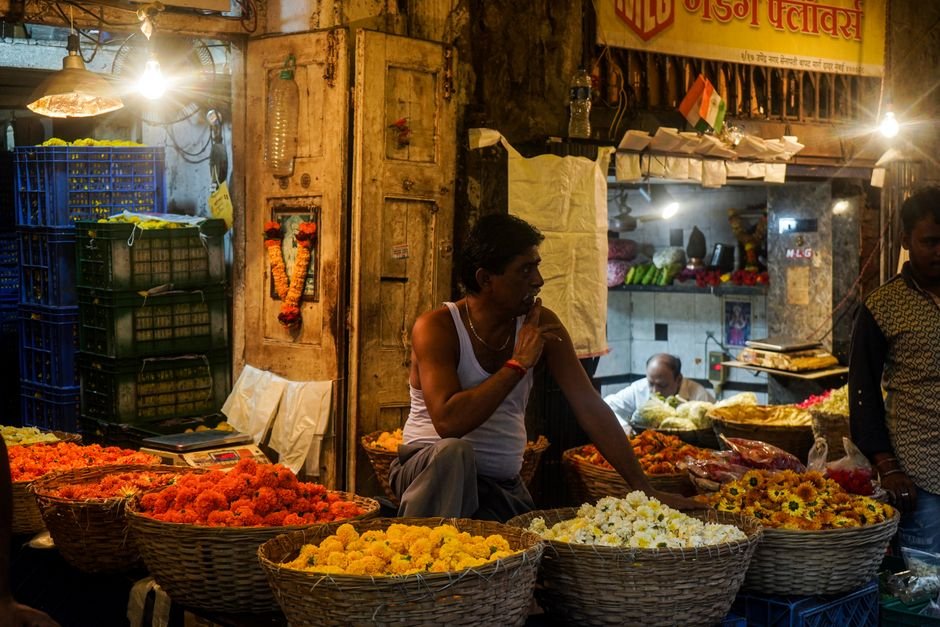
Here is the critical insight for international sellers: more than 88% of Indian retail still runs through traditional trade. Kirana stores, the small mom-and-pop shops found on nearly every street corner, are the backbone of Indian consumption. There are over 12 million of them, and each one restocks weekly through wholesale suppliers. This deeply fragmented retail network creates massive and recurring demand for products that most Western wholesalers have never considered.
The Rise of Fixed-Price Retail in India
Fixed-price “dollar store” retailing is a relatively new format in India, but it is growing fast. Chains operating the INR 99 Store model have demonstrated that price-transparent retail works exceptionally well in a market where value consciousness is a cultural norm. Consumers want clearly displayed prices, consistent quality, and everyday items that fit their household budgets.
The 99 Store format works in India because price-sensitive consumers respond strongly to fixed-price retailing. For wholesalers, this is a golden window: early entrants into this niche — particularly on the supply side — are securing long-term relationships with store owners before competition heats up.
How Does the Wholesale Business Model in India Actually Work?
The wholesale model in India follows a well-established distribution hierarchy. At the top sit importers and large-scale wholesalers who bring goods into the country or source directly from manufacturers. Below them are channel distributors who serve specific regions, followed by semi-wholesalers who break bulk for smaller retailers, and finally the kirana stores and retail shops that serve end consumers.
For an international entrepreneur, the most profitable position is at the top of this chain — as the importer or bulk supplier. By importing directly from Yiwu, you bypass multiple layers of local middlemen who often add 20-30% in costs before products even reach the retailer.
Import-Led Wholesale vs. Local Manufacturing
India has a growing manufacturing base, but its capacity in small consumer goods — the heart of dollar store retailing — remains inconsistent in both price and quality. China’s Yiwu market alone supplies over 4,000 distinct product categories, many of which have no equivalent domestic source at comparable price points. For categories like kitchenware, cleaning tools, stationery, and gift items, Chinese suppliers routinely beat Indian manufacturers on price by 30-50%.
The standard wholesale model used by successful importers selling to India:
- Partner with an export wholesaler like AwwwStore based in Yiwu for consolidated sourcing across hundreds of SKUs.
- Ship full or partial containers to Indian ports — Mumbai (Nhava Sheva), Chennai, Mundra, or Kolkata.
- Work with a local clearing agent to handle customs clearance and duty payment (they typically charge 1-2% of cargo value).
- Distribute through regional wholesalers who already have delivery networks reaching lakhs of kirana stores.
- Maintain 15-30% margins at the wholesale tier while still leaving room for retailers to earn their own 20-25% markups.
Which Product Categories Sell Fastest to Indian Wholesale Buyers?
Not all products move at the same speed in the Indian market. Based on demand data from AwwwStore’s India-focused shipments and established consumer patterns, these categories consistently outperform in the wholesale channel:
1. Home & Kitchen Essentials
Indian households place a premium on kitchen and food-prep items. Stainless steel utensils, food storage containers, spice racks, flour sifters, and traditional cooking tools have exceptionally high sell-through rates. In the 99 Store format, kitchen products account for 25-30% of total revenue at many locations.
2. Cleaning & Household Supplies
Brooms, mops, dustpans, microfiber cloths, laundry baskets, storage boxes, and plastic buckets are daily-use items with high repeat purchase frequency. Because they are bulky and relatively low-cost, consumers rarely negotiate price — making margins healthier than in most other categories.
3. Stationery & Office Supplies
India has the world’s largest school-age population, with over 250 million students. Notebooks, pens, pencils, crayons, geometry boxes, and school bags create two massive seasonal sales spikes — in April-June (new school year) and October-January (exam season). Wholesalers who stock up before these peaks achieve turnaround times of under 30 days.
4. Personal Care & Hygiene Accessories
Brushes, combs, nail clippers, bath accessories, mirrors, and other non-cosmetic personal care items are steady movers. These products carry lower regulatory burden than cosmetics, yet deliver comparable retail margins. Demand is year-round and largely recession-resistant.
5. Toys, Gifts & Seasonal Decor
India’s festive calendar is extraordinary — Diwali, Holi, Eid, Durga Puja, Christmas, and numerous regional fairs create dozens of gifting occasions annually. Small toys, novelty gifts, fairy lights, and decorative items see demand surges of 200-300% during festival periods. Importers who time their shipments for these windows capture premium wholesale pricing.
What Are the Real Costs of Importing Dollar-Store Goods into India?
Before placing a bulk order, every wholesaler needs a realistic picture of landed costs. India’s customs duty structure combines Basic Customs Duty (0-20%), a Social Welfare Surcharge on some lines, and Integrated GST (IGST) that is often creditable under the GST system. For most dollar-store consumer goods, total effective import duty lands between 10% and 22% — well below what many importers initially fear.
| Categoría de producto | Typical Landed Cost (USD/Carton) | Effective Import Duty | Wholesale Margin | Retail Markup |
|---|---|---|---|---|
| Home & Kitchen | $25 – $45 | 10 – 20% | 15 – 25% | 2.5x – 3.5x |
| Cleaning & Storage | $15 – $35 | 10 – 15% | 20 – 30% | 2x – 3x |
| Artículos de papelería | $12 – $30 | 10 – 15% | 18 – 28% | 2x – 3x |
| Personal Care Accessories | $20 – $40 | 10 – 20% | 20 – 30% | 2.5x – 4x |
| Juguetes y Regalos | $18 – $38 | 10 – 20% | 15 – 25% | 2.5x – 3x |
Shipping is the other major cost component. A 20-foot container from Yiwu to Nhava Sheva (Mumbai) typically costs $1,200-$1,800 and arrives in 18-25 days. A 40-foot container runs $2,000-$3,000 and takes similar time. When split across a high-density dollar-store product mix, freight adds roughly 3-6% to the total landed cost per carton — a manageable number that still leaves substantial margin.
¿Planeas abrir una Dollar Store?
Obtén nuestro Kit de inicio gratuito de $5,000 — el plan completo desde la compra en Yiwu hasta el día de apertura, con desgloses de costos reales para tu país.
Obtén kit de inicio gratuito →How to Start a Wholesale Business in India Without a Local Company
Many entrepreneurs assume they need an Indian business entity, a local office, or an import-export code (IEC) to sell into India. In reality, you can start from anywhere in the world. Here is the step-by-step path that AwwwStore recommends to clients building wholesale supply lines into India.
Step 1: Choose Your Product Mix
Select 80-150 SKUs across 5-6 high-demand categories. For the INR 99 Store format, every product must retail at the fixed price point or in a clear sub-pricing structure. Avoid items with fragile packaging or complex regulatory requirements. A good mix: 30% home & kitchen, 20% cleaning, 20% stationery, 15% personal care, and 15% toys/gifts.
Step 2: Identify a Reliable Export Wholesaler
Working directly with 30-50 separate factories in Yiwu is impractical for most first-time importers. An experienced export wholesaler like AwwwStore consolidates hundreds of products under one quality standard, one commercial invoice, and one shipment. This simplifies your logistics, reduces total freight cost per unit, and gives you a single point of accountability.
Step 3: Negotiate Incoterms and Payment Terms
Most Chinese export suppliers quote on an EXW (Ex Works) or FOB (Free on Board) basis. For India-bound shipments, FOB Yiwu with a trustworthy freight forwarder is the most transparent approach. Payment terms are typically 30% deposit and 70% before shipment, though established partners may offer credit lines after a history of clean orders.
Step 4: Handle Customs and Import Documentation
India requires an IEC number, but your Indian buyer or clearing agent can provide this on their side if you ship on a DDP (Delivered Duty Paid) basis. AwwwStore’s export team prepares all shipping documentation — commercial invoice, packing list, bill of lading, and certificate of origin — to ensure smooth clearance at Indian ports.
Step 5: Build a Distribution Network
Start with one regional wholesale partner in a major state like Maharashtra, Gujarat, Karnataka, or West Bengal. Build a track record of consistent supply and you will quickly attract demand from neighboring districts. As volumes grow, expand into direct relationships with multi-store retail chains.
India vs. China: Which Sourcing Route Delivers Better Margins for Wholesalers?
It is a question every international wholesaler confronts: should you manufacture or source within India, or import from China? The answer depends heavily on your product category, volume, and margin targets. Here is a direct comparison based on current market conditions: