📖 7 min read
If you’ve ever walked into a Dollarama store in Canada, you’ve probably wondered — how can they sell so many different things for just a few dollars and still thrive?
Well, the story of Dollarama is one of smart business decisions, innovation, and the power of understanding what people truly need.
How It All Began
Dollarama’s story started in 1910, when Salim Rossy, a Lebanese immigrant, opened a small variety store in Montreal, Quebec. It wasn’t called Dollarama yet — it was part of a family-run business known as S. Rossy Inc., which sold everyday goods at affordable prices.
Decades later, Salim’s grandson, Larry Rossy, took over the business in the 1990s and had a bold idea: instead of selling items at various prices, what if everything cost just one dollar?
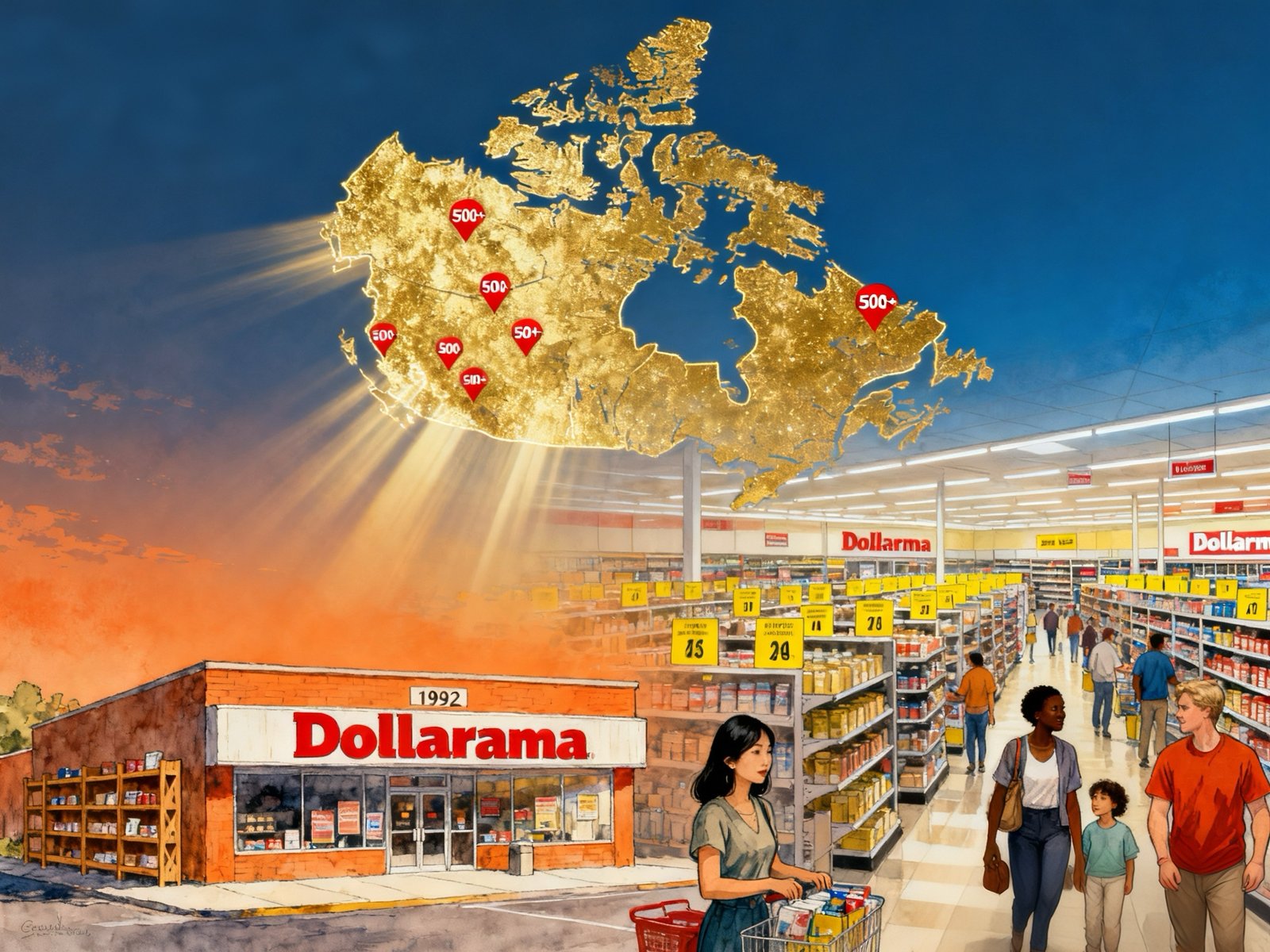
In 1992, Larry opened the very first Dollarama store in Matane, Quebec, and that one decision completely changed the discount retail industry in Canada.
The Rise of an Empire
People loved the concept immediately — simple prices, quick decisions, and surprising variety. Over the years, Dollarama expanded rapidly across Canada.
By focusing on high-volume sales and low margins, the company was able to keep prices low while still making a profit. They achieved this by buying directly from manufacturers around the world, particularly from suppliers in China, which allowed them to offer everyday essentials, party supplies, toys, kitchenware, and seasonal products at unbeatable prices.
In 2009, Dollarama went public on the Toronto Stock Exchange (TSX) — a major milestone that gave them even more capital to grow.
Fast forward to today, Dollarama operates over 1,500 stores across Canada and is valued at billions of dollars. They’ve even expanded internationally by investing in Dollarcity, a Latin American chain with stores in Colombia, Guatemala, El Salvador, and Peru.
Adapting to Changing Times
One of the smartest moves Dollarama made was adapting its pricing strategy. Though it started as a true “everything’s $1” store, the company later introduced multiple price points — up to $5 — to stay competitive while maintaining quality and affordability.
They also modernized their logistics, opening a massive distribution center in Montreal and improving supply chain efficiency with advanced inventory systems.
Despite rising costs and inflation, Dollarama remains a favorite for millions of Canadians who want value, convenience, and trust.
What We Can Learn from Dollarama’s Success
Dollarama’s journey offers powerful lessons for entrepreneurs everywhere:
- Start simple but think big. A single idea — “everything for $1” — turned into a national empire.
- Understand your market. People always look for value and affordability, no matter the economy.
- Build strong supplier relationships. Their partnership with international manufacturers allowed them to offer great products at low prices.
- Adapt to change. Dollarama evolved with customer needs and market realities instead of sticking to one rigid model.
How AwwwStore Connects to This Story
At AwwwStore, we share that same vision — making high-quality products accessible to everyone at the lowest possible price.
Just like Dollarama, we work directly with manufacturers and suppliers, especially in China, to bring an incredible variety of items to people and entrepreneurs who want to start their own dollar stores or buy wholesale at affordable rates.
But what makes AwwwStore special is that we’re taking this model global and digital. We provide a bridge between Latin American entrepreneurs and Asian suppliers, helping small business owners open their own stores without the massive investment or complicated logistics.
Dollarama proved that the dollar store model works — and at AwwwStore, we’re helping the next generation of entrepreneurs bring that same success to their own communities.
In short…
From one small store in Quebec to an international powerhouse, Dollarama shows what’s possible when you believe in the power of affordability. And AwwwStore is here to continue that story — connecting the world, one affordable product at a time.
Key Operational Strategies That Fueled Dollarama’s Growth
Beyond the inspiring narrative of expansion, Dollarama’s success is deeply rooted in a ruthless focus on supply chain efficiency and private-label development. The company leverages its massive scale to negotiate directly with manufacturers—many of whom are based in global hubs like Yiwu, China—to secure exclusive, low-cost production runs. This “direct sourcing” model allows Dollarama to bypass traditional distributors, slashing costs by an estimated 20-30% compared to smaller retailers. For aspiring dollar store owners, this highlights a critical lesson: your profit margins are determined long before products hit your shelves.
Another pillar of Dollarama’s strategy is its “treasure hunt” merchandising approach. Unlike fixed-price retailers, Dollarama constantly rotates inventory, introducing new, limited-time items that create urgency and repeat foot traffic. They also maintain a disciplined pricing architecture—with items capped at $5.00 CAD—which simplifies decision-making for budget-conscious shoppers. If you are planning to start a dollar store, you can replicate this by dedicating 15-20% of shelf space to seasonal or trending products sourced from flexible suppliers. AwwwStore’s product catalog offers thousands of rotating SKUs perfect for this strategy, from home goods to party supplies, all available with low minimum order quantities.
Finally, Dollarama’s real estate play is a masterclass in location science. They strategically place stores in high-traffic, middle-income neighborhoods—often near grocery anchors like Walmart or Loblaws—rather than in low-income areas. This ensures a steady stream of “convenience shoppers” who stop in for a single item but leave with a full basket. When sourcing your inventory, remember that location dictates product mix. A store near a school might prioritize stationery and toys (easily found via bulk order on AwwwStore), while a store near a residential area might focus on cleaning supplies and kitchen gadgets.
Planning to Open a Dollar Store?
Get our free $5,000 Starter Kit — the complete blueprint from Yiwu sourcing to opening day, with real cost breakdowns for your country.
Get Free Starter Kit →Frequently Asked Questions
How much capital do I need to open a dollar store similar to Dollarama?
While Dollarama operates on a massive scale, a small independent dollar store typically requires $50,000 to $150,000 in startup capital. This covers initial inventory (40-50% of the budget), lease deposits, shelving, and a point-of-sale system. AwwwStore helps reduce inventory costs with factory-direct pricing and flexible MOQs as low as 5-10 units per SKU.
What are the most profitable product categories for a dollar store?
Based on industry data, the top three categories are cleaning supplies (35-50% margins), party and seasonal items (40-60% margins), and household plastics (30-45% margins). Dollarama’s success relies heavily on consumables that drive repeat visits. You can explore these high-margin categories in our product catalog.
Can I source products directly from Yiwu manufacturers like Dollarama does?
Absolutely. AwwwStore is headquartered in Yiwu and connects you directly with verified manufacturers. Unlike Dollarama, which orders in container-load quantities, we offer flexible minimum order quantities (MOQs) as low as 10-50 units per design, making direct sourcing accessible for independent store owners. Visit our about page to learn more about our Yiwu headquarters and vetting process.
How often should I rotate my inventory to keep customers coming back?
Dollarama introduces new items weekly. For a smaller store, aim for a 15-20% inventory refresh every 2-4 weeks. Focus on seasonal items (holidays, back-to-school) and trending products. AwwwStore’s catalog updates monthly, giving you access to new, hot-selling items without committing to large pre-orders.
What is the average markup on dollar store products?
Standard retail markup for dollar stores is 2x to 4x the wholesale cost. For example, an item you buy for $0.50 can be sold for $1.00 to $2.00. However, consumables like candy and snacks typically have lower margins (20-30%), while general merchandise like toys and tools offer higher margins (50-100%). AwwwStore’s wholesale pricing helps you achieve these margins by eliminating middlemen.
Ready to Source Your Dollar Store Products?
AwwwStore connects you directly with verified Yiwu manufacturers. Get wholesale prices, flexible MOQs, and reliable shipping.
Get a Free Quote TodayReady to Source Products for Your Dollar Store?
Get a free consultation and custom product plan tailored to your market.
Get Free Quote
Romy is a market research analyst at AwwwStore covering emerging dollar store markets in Latin America, Africa, and Southeast Asia. She creates data-driven guides to help entrepreneurs identify high-potential locations and product trends.