📖 11 min read
South America’s “things market” — the dollar store and variety goods retail sector — is strongest in São Paulo, Bogotá, Lima, Santiago, and Buenos Aires, with Brazil dominating regional sales. Dollar store owners sourcing from Yiwu can access the region’s fastest-growing retail channel through AwwwStore, a Yiwu-based wholesaler that supplies 3,000+ stores in 20+ countries with container loads of affordable “things” built for Latin American consumers.
- South America’s dollar store market is projected to grow 6.8% annually through 2028 — faster than the global average of 4.5%.
- Brazil accounts for nearly 40% of South America’s total dollar store sales volume, followed by Argentina (18%) and Colombia (14%).
- More than 70% of dollar store inventory sold in South America can be sourced from Yiwu manufacturers at under $1.00 per unit.
- Starting a standard 80–120 m² dollar store in a mid-sized South American city costs between $25,000 and $40,000, including first inventory.
- Shipping from Yiwu to major South American ports (Callao, Santos, Cartagena, Valparaíso, Buenos Aires) takes 20–45 days via sea freight.
Where Is the “Things Market” Located in South America?
The “things market” is not a single mall or aisle — it is the entire variety retail ecosystem where shoppers buy everyday household items, party goods, toys, stationery, and cleaning supplies at ultra-low price points. Each South American country has its own name for it: “Bazar” in Peru, “Todo por 2 Pesos” in Argentina, “Todo a 1.999” in Colombia, “Loja de R$ 1,99” in Brazil, and “Todo a Luca” in Chile.
For importers and store owners, the geographic “location of the things market” matters at three levels: wholesale source, import gateway, and retail street. The wholesale source is Yiwu, China. The import gateways are South America’s port cities. The retail streets are dense commercial corridors where dollar stores cluster for walk-in traffic.
The 5 Retail Hubs That Define South America’s Dollar Store Market
| Country | Commercial District / Street | City (Metro Population) | Why It Matters |
|---|---|---|---|
| Brazil | Rua 25 de Março | São Paulo (22M) | Busiest variety goods street in the country; most dollar stores source domestically from importers here |
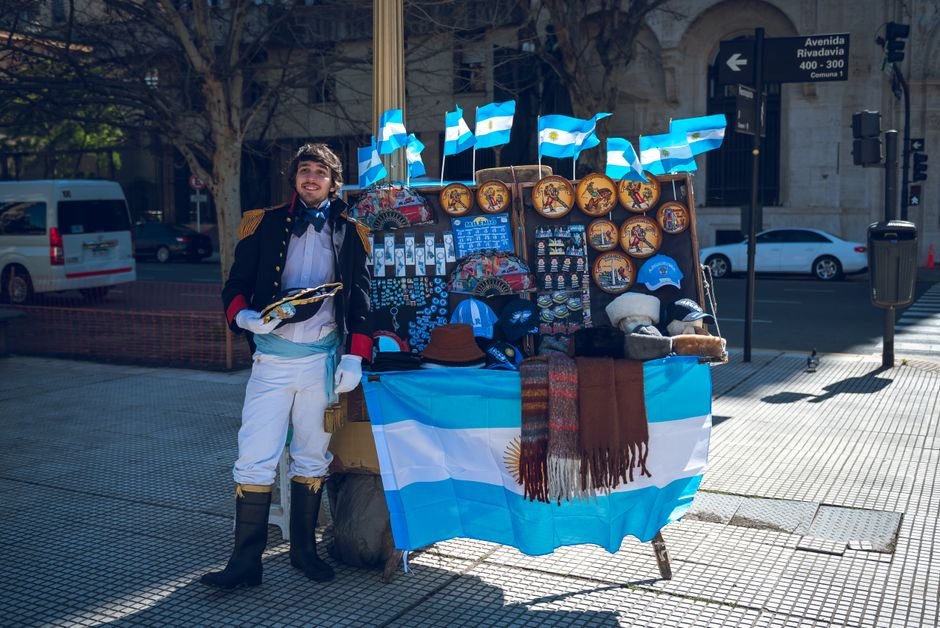
| Argentina | Av. Avellaneda | Buenos Aires (15M) | High-traffic discount retail corridor; strong demand for cheap household “things” |
| Colombia | San Victorino | Bogotá (11M) | Wholesale and retail cluster with high foot traffic; regional redistribution point |
| Peru | Parque Central / Mesa Redonda | Lima (10.8M) | Historic import hub; dozens of wholesale warehouses feed bazaars across the country |
| Chile | Barrio Meiggs | Santiago (6.9M) | Major wholesale and retail district; mixes Chinese imports with local production |
Quotable line: “Brazil accounts for nearly 40% of South America’s total dollar store sales volume.” If you ask where to find the things market on a map, start with 25 de Março Street in São Paulo — it is the beating heart of South American variety retail.
What Drives Demand for Dollar Stores Across South America?
South American shoppers are not “cheap” — they are value-driven. Dollar stores succeed because they solve three structural problems simultaneously: high import taxes on branded goods, volatile inflation, and limited e-commerce infrastructure outside major metros.
- Inflation and price sensitivity: In Argentina and, to a lesser extent, Colombia, consumers continuously trade down from mid-market brands to unbranded or Chinese-manufactured essentials.
- Urban density: South America is one of the most urbanized regions on earth — 84% of the population lives in cities, making high-foot-traffic locations easy to identify.
- Gift and celebration culture: Birthdays, holidays, and school events drive huge demand for party supplies, balloons, candles, and small toys — classic dollar store categories.
- E-commerce gap: Only about 30% of South American households shop online regularly. Cash-based, walk-in “things” stores remain the default purchasing channel.
How Big Is the South American Dollar Store Market Really?
The region’s dollar store and variety retail segment generated an estimated $8.5 billion in retail sales in 2024. That number is growing for a simple reason: per capita retail spending on low-cost household goods has risen 5.2% per year since 2021, while traditional supermarkets have lost share in non-food categories.
| Country | Est. Dollar Store Sales (2024) | Annual Growth | Avg. Price Point per Item |
|---|---|---|---|
| Brazil | $3.4B | 7.1% | R$ 5–10 (~$1–2) |
| Argentina | $1.5B | 5.4% | ARS 1,000–3,000 (~$1–3) |
| Colombia | $1.2B | 6.9% | COP 2,000–5,000 (~$0.50–1.20) |
| Peru | $0.9B | 6.2% | S/ 2–5 (~$0.50–1.30) |
| Chile | $0.8B | 5.8% | CLP 1,000–2,000 (~$1–2) |
| Other (Uruguay, Paraguay, Ecuador, Bolivia) | $0.7B | 6.0% | Varies |
“The South American dollar store market is projected to grow at 6.8% annually through 2028.” That compounds into roughly $11.8 billion by 2028 — which is why international importers and aspiring entrepreneurs keep asking where the best locations and wholesale partnerships are.
How Do You Pick the Best City and Street for a Dollar Store?
“Location of things market” is a practical question. If you are opening a store, you do not need the whole country — you need one street with high pedestrian flow, affordable rent, and category density.
Follow this four-step scoring method we recommend to dollar store owners starting a new business:
Step 1: Target Neighborhoods with 10,000+ Daily Foot Traffic
Use a simple counter or municipal pedestrian data. Markets, metro entrances, municipal markets, and bus terminals pull 15,000–40,000 pedestrians per day. Rent may cost 30–50% more, but your conversion rate rises proportionally.
Step 2: Map Nearby Competitors
Locate the existing dollar stores, bazaars, and minimarkets within a 1 km radius. Three or more competitors in a 500m radius actually mean demand exists — healthy clusters attract shoppers who compare and buy in bundles. Zero competitors usually means the area has no shopping habit.
Step 3: Check Average Ticket Size
Interview 30 shoppers in the target area. Ask how much they spend per visit at a variety store. In Lima and Bogotá, average tickets run $3–5 USD; in Santiago and Buenos Aires, $5–8 USD. Your mix of products must match the local ticket.
Step 4: Negotiate Rent Below 8–10% of Projected Revenue
Calculate gross monthly revenue = average ticket × daily customers × 30 days. Rent should never exceed 10% of that. A store pulling $12,000/month in revenue can justify up to $1,200/month in rent — not more.
Why Yiwu, China Is the True Source of South America’s “Things”
Every “things market” in South America — from 25 de Março to Meiggs — is stocked by products that passed through Yiwu, China. Yiwu is the world’s largest wholesale market for small commodities: approximately 550,000 product types are sold through 75,000 booths across a 6 million m² trading area.
AwwwStore sits in Yuanhang, Yiwu, within 10 minutes of the main International Trade City. We exist for exactly this reason: to let South American store owners skip the 10+ agent layers and factories that dominate traditional sourcing. You get Yiwu prices, mixed-product containers, and a single point of contact that speaks English, Spanish, and Portuguese. Explore our dollar store products catalog to see which of the bestselling items are available for mixed orders.
Unlike a general trading company, AwwwStore focuses on the complete dollar store assortment — 1,500+ active SKUs across 22 categories, with new items added every month. You do not need to chase down 40 factories; we aggregate the best-selling “things” into efficient, cheap, store-ready boxes.
How Do You Import Cost-Effective Products into South America?
The biggest mistake South American importers make is ordering only from localized agents, which lifts per-unit costs by 30–60%. Here is the direct import path that keeps margins healthy:
1. Choose Mixed Container Loading (LCL or FCL)
For stores under 200 m², use LCL (less-than-container-load) for 60–120 days of inventory. Once you pass ~15 m³ per order, switch to FCL (20-foot container), which cuts per-unit freight costs by 40%.
2. Use a Single Wholesale Supplier
Working with one full-range supplier like AwwwStore reduces freight consolidation fees, customs documentation errors, and lead time. Our wholesale and bulk order program lets you mix over 1,000 SKUs in one order with no minimum per SKU.
3. Understand Duties and Taxes Per Country
Typical import duty on Chinese-origin goods into South America ranges from 10% (Chile, Peru) to 35% (Argentina, Brazil). Even at 35%, a $0.50 Yiwu product lands at roughly $0.68 — still sellable at 4–7x retail markup in local currency.
4. Plan Shipping Schedules by Port
| Destination Port | Average Transit Time from Yiwu | Typical Port-FCL Cost (USD) |
|---|---|---|
| Callao, Peru | 28 days | $2,400–$2,900 |
| Santos, Brazil | 38 days | $3,200–$3,800 |
| Cartagena, Colombia | 32 days | $2,600–$3,100 |
| Valparaíso, Chile | 30 days | $2,500–$3,000 |
| Buenos Aires, Argentina | 35 days | $2,900–$3,500 |
“Opening a dollar store in a mid-sized South American city costs between $25,000 and $40,000.” That number includes a 20-foot container of stock, store fit-out, permits, and working capital for the first 60 days — which makes it the most capital-efficient retail business on the continent.
Which Products Sell Fastest in South American Dollar Stores?
Not every product in a Yiwu catalog works in South America. The winning mix across our Latin American client base is consistent. These categories consistently generate 45–60% gross margins at local retail price points:
- Party and celebration goods (25% of sales): balloons, banners, candles, piñata accessories — Latin American celebrations drive a huge share of store revenue.
- Household cleaning and kitchen tools (20% of sales): sponges, brushes, containers, storage boxes, clothespins.
- Personal care accessories (15% of sales): combs, mirror sets, manicure tools, hair ties, cotton pads.
- Stationery and school supplies (15% of sales): notebooks, pens, pencils, crayons — demand spikes in Feb/Mar and Aug/Sep.
- Toys and impulse items (15% of sales): small plastic toys, slap bracelets, fidget toys, card games.
- Seasonal and holiday-specific goods (10% of sales): Christmas, Mother’s Day, Halloween, and national independence days.
Browse the full range on our online product catalog and filter by category and price point. We update the catalog monthly to reflect what is moving fastest in Latin American markets, and our team in Yiwu can recommend specific SKUs based on your target country.
How AwwwStore Supports Dollar Store Owners in South America
AwwwStore is not just a product supplier — we are a sourcing partner for the Latin American dollar store model. Our Latin America program already serves store owners in Peru, Chile, Colombia, Brazil, Ecuador, and beyond. With headquarters in Yiwu, China, and a dedicated export team that speaks native English, Spanish, and Portuguese, we handle procurement, quality inspection, export documentation, and consolidation.
We also support entrepreneurs who, despite living in South America, may be closer to an existing retail hub. Our dedicated programs for India’s 99-store format, Nepal, and Sri Lanka share the same operational playbook: ultra-low-cost sourcing plus fast-moving assortment planning. Whichever market you serve, the sourcing fundamentals are identical — price per unit, freight cost, landed cost, and retail markup.
If you are evaluating whether the South American “things market” fits your business, start with a conversation. Our free consultation costs nothing and gives you a straight answer about landed costs, product selection, and the realistic path from Yiwu to your storefront.
Need the Right Products for Your Store?
Download our catalog of 200 best-selling dollar store products — with wholesale prices from $0.10, MOQ as low as 100 pieces, and profit margins up to 300%.
Browse Product Catalog →Frequently Asked Questions
What is the “things market” in South America?
The “things market” is the regional term for the dollar store and variety goods retail sector — stores that sell everyday household items, toys, party supplies, and stationery at a single low price point or small price range. It is the most accessible retail channel for middle- and low-income consumers in South America.
Where is the best country in South America to open a dollar store?
Brazil offers the largest total market, while Chile and Peru offer the best regulatory ease and lowest import duties on Chinese goods. Any of these three is a strong first move; your choice should depend on capital, local knowledge, and personal network.
How much does it cost to open a dollar store in South America?
Starting a standard 80–120 m² dollar store costs between $25,000 and $40,000, including first inventory, rent deposits, fixtures, permits, and 60 days of working capital. A container of Yiwu-sourced products typically represents 50–60% of that budget.
How long does shipping from Yiwu to South America take?
Sea freight from Yiwu to major South American ports takes 28–38 days depending on the destination. Lima receives goods fastest, while Brazilian ports like Santos take the longest due to distance and customs procedures.
Does AwwwStore supply dollar stores in South America?
Yes — AwwwStore supplies 3,000+ stores across 20+ countries, including active clients in Peru, Colombia, Chile, Brazil, and Argentina. We offer mixed containers, full-container programs, and dedicated Spanish- and Portuguese-speaking export staff for Latin American buyers.
Ready to Stock Your South American Dollar Store?
Get real Yiwu wholesale prices, tailored SKU recommendations for your country, and a clear landed-cost calculation — all in one free consultation. Let AwwwStore be your competitive advantage in the South American things market.
Get a Free Wholesale QuoteReady to Source Products for Your Dollar Store?
Get a free consultation and custom product plan tailored to your market.
Get Free Quote